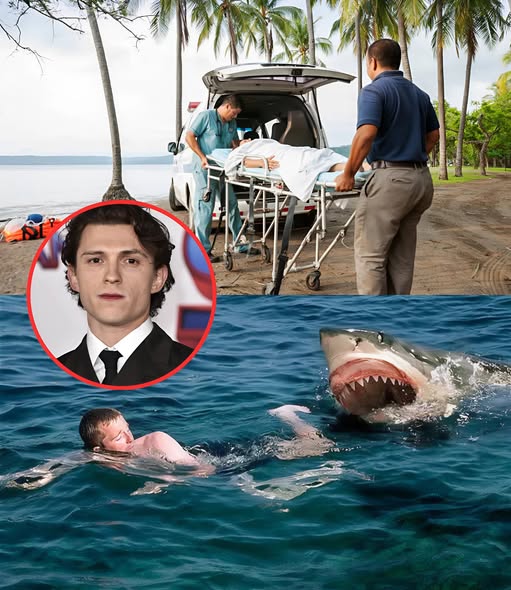
The viral reports of a shark attack involving Tom Holland unleashed a level of public panic and debate that stretched far beyond one incident, revealing how quickly modern audiences slip into fear, misinformation, and outrage when a beloved public figure is suddenly placed in danger.
Within minutes of the news breaking, social networks erupted with speculation, disbelief, and frantic demands for updates, proving once again that celebrity incidents crash into the public consciousness with a speed and force normally reserved for political scandals or national emergencies.
The shock wasn’t just that a shark incident occurred — those happen globally every year — but that it reportedly involved an actor who occupies a unique place in cultural imagination, where fans project safety, youth, and invincibility onto him largely because of his heroic roles.
Public reaction exposed a deeper psychological pattern: people accept danger abstractly until it touches a symbol they emotionally connect with, and once that connection is threatened, the conversation shifts from general concern to a collective emotional crisis.
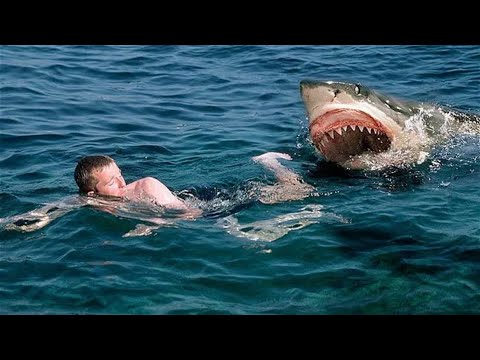
The incident immediately ignited debates about beach safety, wildlife management, and tourism responsibility, but beneath that surface was a more uncomfortable conversation about how unprepared the public is for unpredictable natural threats, especially when amplified through celebrity exposure.
As details emerged that witnesses saw a large shark charging toward swimmers, the narrative intensified, fueling broader discussions about coastal oversight and whether rising environmental disruptions are changing animal behavior in ways governments have failed to address.
Tom Holland’s involvement escalated the moment from a standard beach incident to a global talking point, because his fanbase spans continents, and any threat to his wellbeing becomes instantly magnified through millions of emotionally invested followers.
This magnification raises an important issue: modern media consumption creates a dangerous feedback loop where the public experiences celebrity danger as personal crisis, amplifying public fear and distorting the scale of risk associated with natural threats.
Experts quickly stepped in to calm speculation, explaining that shark encounters remain statistically rare, but the conflation of celebrity and danger had already set public perception, demonstrating how emotion often overtakes scientific context when narratives move too quickly.
The broader cultural reaction reflects a society increasingly shaped by real-time shock events, where incomplete information circulates faster than verified updates, and public imagination fills the gaps with scenarios far more dramatic than reality.
Tom Holland’s name trending globally within minutes wasn’t simply about concern; it revealed how deeply entangled the entertainment industry has become with collective emotional psychology, where fans form parasocial attachments that intensify public reactions to danger.
The beachgoers’ firsthand accounts sparked debate about emergency response standards, with critics arguing that coastal regions remain underprepared for fast-moving natural incidents, especially during peak tourist seasons when waters fill with inexperienced swimmers.
Meanwhile, environmental advocates used the moment to argue that human activity continues disrupting coastal ecosystems, pushing wildlife into closer contact with beach zones in ways that increase the likelihood of incidents that fuel public fear unfairly toward marine life.
A central tension emerged between public outrage and scientific caution, because while people demanded accountability and rapid policy changes, marine biologists urged restraint, warning that isolated incidents should not drive reactionary policies harmful to ocean ecosystems.
Tom Holland’s situation highlighted how celebrity involvement in natural threats becomes politicized, with factions arguing for stricter wildlife control, others demanding conservation-first policies, and many claiming the incident reflects governance failures in coastal management.
This politicization indicates a broader trend where any high-profile incident becomes a proxy battle for deeper ideological arguments, regardless of whether the event itself deserves sweeping national debate or targeted, practical evaluation.
The emotional intensity of the public response underscores how celebrity vulnerability disrupts the cultural expectation that famous figures remain insulated from real-world danger, creating cognitive dissonance that drives exaggerated reactions and aggressive calls for reform.
Holland’s fans, in particular, responded with a level of urgency more typical of political emergencies, flooding platforms with messages demanding transparency, rapid updates, and reassurances long before official statements were released.
This pressure exposed the modern media dilemma: authorities and news outlets must respond instantly to prevent misinformation from dominating the narrative, yet premature reporting risks fueling confusion or propagating inaccuracies.
The shark attack discussion also exposed an underlying societal discomfort with unpredictability, because natural incidents remind people that no degree of fame, wealth, or cultural importance guarantees safety in environments governed by nature rather than human control.
Holland’s public image contributed to the scale of reaction, because he is often portrayed as grounded, relatable, and humble, and any threat to such figures triggers a sense of collective protection that amplifies emotional stakes among fans and general audiences alike.
Commentators pointed out that if the victim were unknown, the story would likely remain local, illustrating how media attention mirrors public bias and how cultural narratives prioritize certain lives based on visibility rather than objective severity.
This disparity fuels larger debates about media ethics, public empathy, and the boundaries of collective concern, prompting difficult questions about whether society has become selective in how it allocates compassion and urgency.
At the same time, the global panic revealed how deeply technology has reshaped crisis perception, because livestream clips, rapid witness posts, and algorithm-driven amplification create an illusion of immediacy that intensifies fear even when facts remain incomplete.
As the situation evolved, public discourse expanded to include discussions on coastal preparedness, first-responder training, and the need for better swimmer education, showing that high-profile incidents can catalyze meaningful conversations when emotional reactions settle.
Environmental groups emphasized that shark attacks are often misunderstood, arguing that sharks act on instinct rather than malice and that reactionary culling or aggressive policies could harm marine balance far more than they protect people.
Tourism authorities faced pressure as both critics and supporters debated whether beaches should adapt new safety protocols, such as expanded surveillance, improved warning systems, or seasonal restrictions based on observed wildlife patterns.
The incident also reignited old debates about climate change, ocean temperatures, and habitat displacement, as scientists warned that warming waters push marine life closer to coastal zones, increasing the likelihood of human-wildlife encounters.
Holland’s involvement, though unintentional, transformed this scientific conversation into a mainstream topic, demonstrating how celebrity-linked incidents can accelerate public engagement with issues that normally struggle to gain traction.
The public will likely continue discussing this event for weeks because it combines shock, emotion, celebrity, and unresolved questions, making it the kind of story that moves beyond news cycles into ongoing cultural discourse.
Ultimately, the shark attack involving Tom Holland is less about the specific event and more about the public reaction, the emotional machinery of modern media, and the growing difficulty of distinguishing genuine concern from panic-fueled sensationalism.
The incident forces society to confront uncomfortable truths about how it processes danger, how it responds to threats involving celebrities, and how it often struggles to balance empathy, rationality, and scientific understanding during emotionally charged moments.
In the end, the public’s intense reaction says more about cultural expectations and collective psychology than it does about sharks, beaches, or nature itself, revealing a society perpetually caught between fascination and fear whenever vulnerability crosses into the spotlight.